How did you come to know what you know? According to some psychologists, we might know what we know because of the processes of assimilation and accommodation.
These fairly common words have other meanings - assimilation is often associated with cultural integration and accommodation is associated with finding a place to sleep at night! But for this blog post, we’re going to talk about these terms as they relate to developmental psychology.
What Are Assimilation and Accommodation?Who Is Jean Piaget?AdaptationAssimilationAccommodationAccommodation and Assimilation Happen Every DayAssimilation and Accommodation vs. Neuroplasticity
What Are Assimilation and Accommodation?
Who Is Jean Piaget?
Adaptation
Assimilation
Accommodation
Accommodation and Assimilation Happen Every Day
Assimilation and Accommodation vs. Neuroplasticity
Assimilation and accommodation describe two different processes that describe how we come to “know what we know.” They both fall under the umbrella term “adaptation.”Adaptation is the process of changing schema with new information. Jean Piaget first introduced these terms as he conducted work on cognitive structures and cognitive development.
So let me ask you again:
How did you come to know what you know?
This is a big question, and maybe something you’ve never thought about. The answer might seem simple: at one point or another, you learned something and stored it in your brain. When you want to grab information out of your brain, it seems to pop up out of nowhere. If you can’t find the information you are looking for, you might turn to outside sources to learn more: Google, YouTube, a friend, etc.
But the way that you learn and store new information may look different than a friend’s. It may look different from someone who had access to different experiences! When psychologists look at the way that we learn new things, they find a certain amount of importance in the things that we have learned before, and how we connect new information to what we already know.
Jean Piaget was a Swiss psychologist known for his Theory of Cognitive Development. Throughout his career, he observed babies and young children as their brains developed and they acquired new information. Children are not born with the ability to work out problems in their heads, weigh the pros and cons of a situation, or even understand that their mother exists, even when she’s not in the room.
Piaget observed that children acquire these skills in stages, which he later titled the “Stages of Cognitive Development.”
Piaget and Schemas
There are a few concepts withinPiaget’s Stages of Cognitive Developmentthat suggest how we continue to build and grow knowledge. One of these concepts is that of the “schema.”
Modern psychologists use the analogy of an index card to describe theschema. Schema are units of knowledge that can be used to organize information and respond appropriately to stimuli. Each schemata in a child or adult’s brain may represent a concept, person, word, etc. Within the schemata is information about how to interpret that concept and how to link it to other schemas in the brain. In addition to index cards, psychologists use the term “building blocks” to describe schema.
 schema
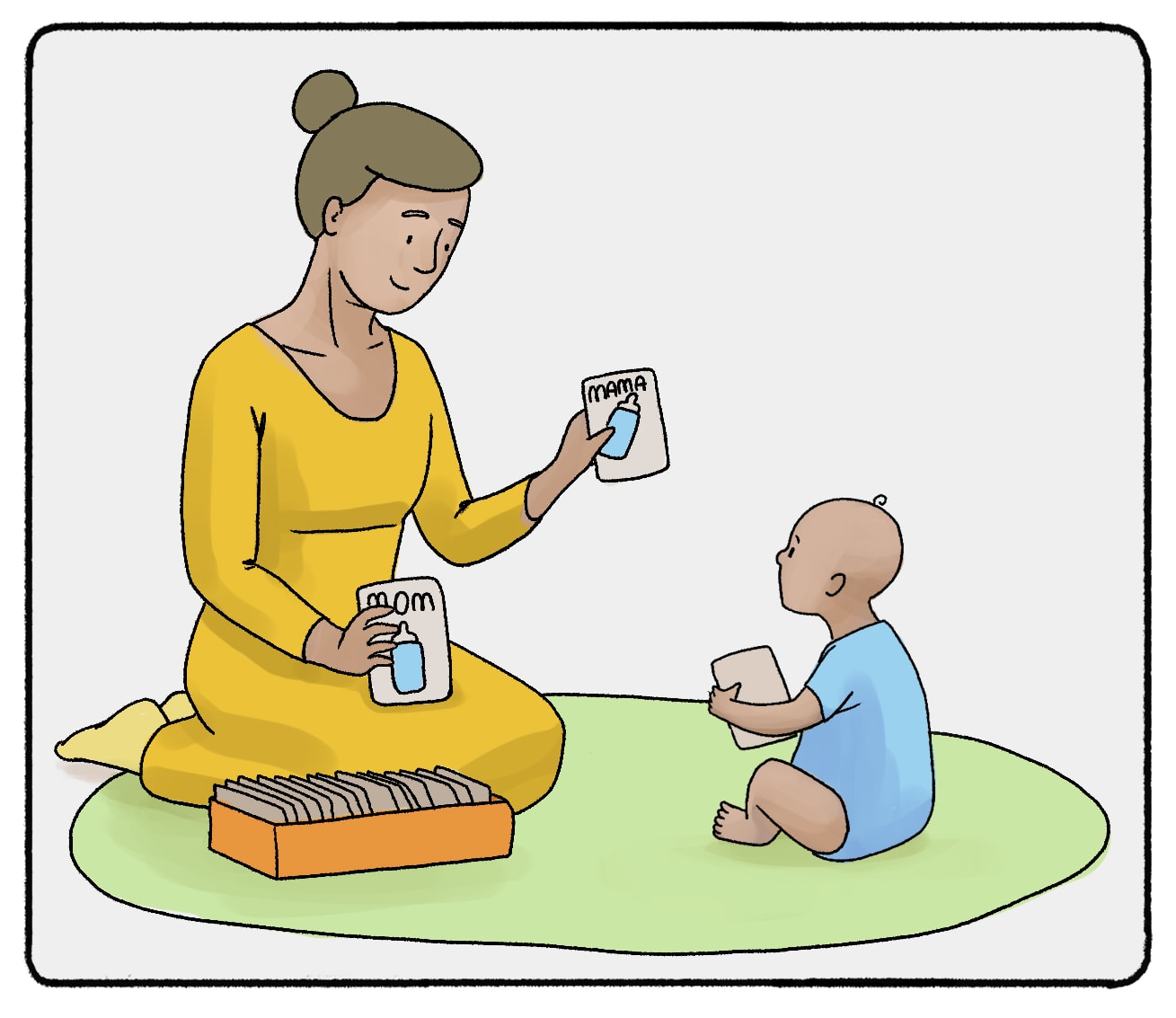
When Do Babies Develop Schema?
Jean Piaget believed that babies develop schema in the earliest stage of their development: thesensorimotor stage.
Now that I have explained the “building blocks” for assimilation and accommodation, let’s talk about these two processes and how they build and shape schema.
Building blocks can be swapped out, changed, or adjusted to build a stronger structure. The information on index cards can be erased, new information can be added, or the index card itself can be placed in a more appropriate file cabinet. Piaget identified these cognitive processes as adaptation. Our perceptions may be adjusted with new information. As a young child, you have a very egocentric thought process. You believe you are the star, the main character, the center of the universe. As you learn that this is not the case, you have to adjust the way that you have perceived a lot of information. Of course, this is just one example. Adaptation can be as simple as changing your opinion on a fast-food chain when you learn that their ethics don’t match yours.
Adaptation includes both assimilation and accommodation, processes that change schema with new information. The amount that these schema are changed will depend on which process the mind is using.
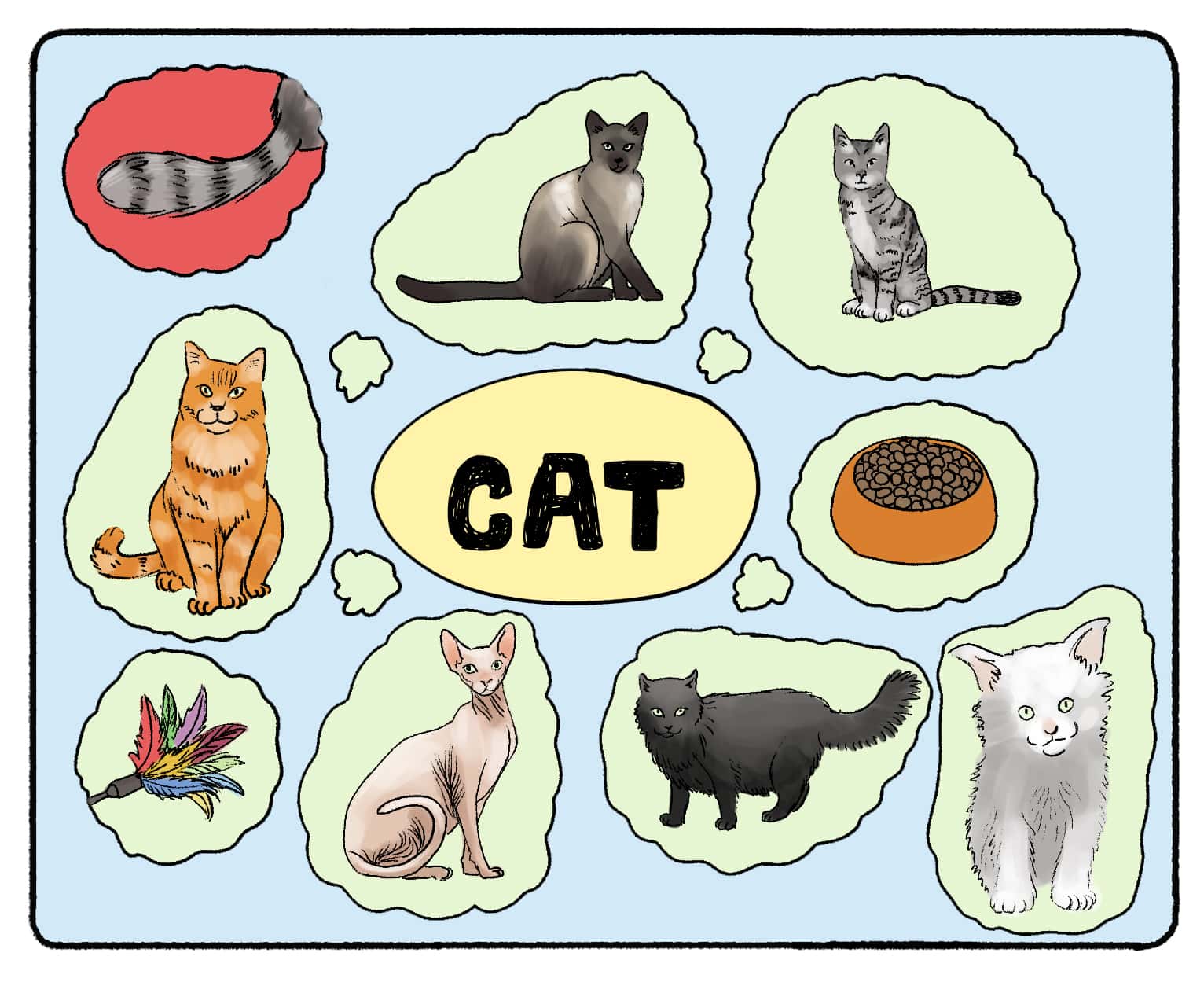
Let’s talk about assimilation first. Assimilation occurs when new information adds to what we already know about a concept. The new information may be added to the schema, like making an extra note on an index card, but does not change much about the rest of the schema.
Assimilation Examples
You can identify a “cat.” Your family has a calico cat that is orange, black, and white. That schemata is already in place, and it includes information about not pulling the cat’s tail, petting the cat gently, and that the cat does not eat “people food.”
This is assimilation of new information, adding or “expanding” previously developed schema.
Here’s another example of assimilation. You are a computer programmer, with knowledge of HTML and CSS. As you take more courses on programming, you learn new languages: Python, Java, PHP. As you assimilate this information, you expand your schema of “computer programming.” You have access to more information as you attempt to solve problems within computer programming.
Assimilation may be viewed as an easy or natural process. Accommodation, for example, is a little more complicated. Building schema is not always a perfect process. You can probably recall a time when you had to “rewind” what you had learned about something and relearn it. You developed certain perceptions of the world, but those perceptions did not always explain the reality in front of you. By changing your perception, you were able to see things in a more clear light.
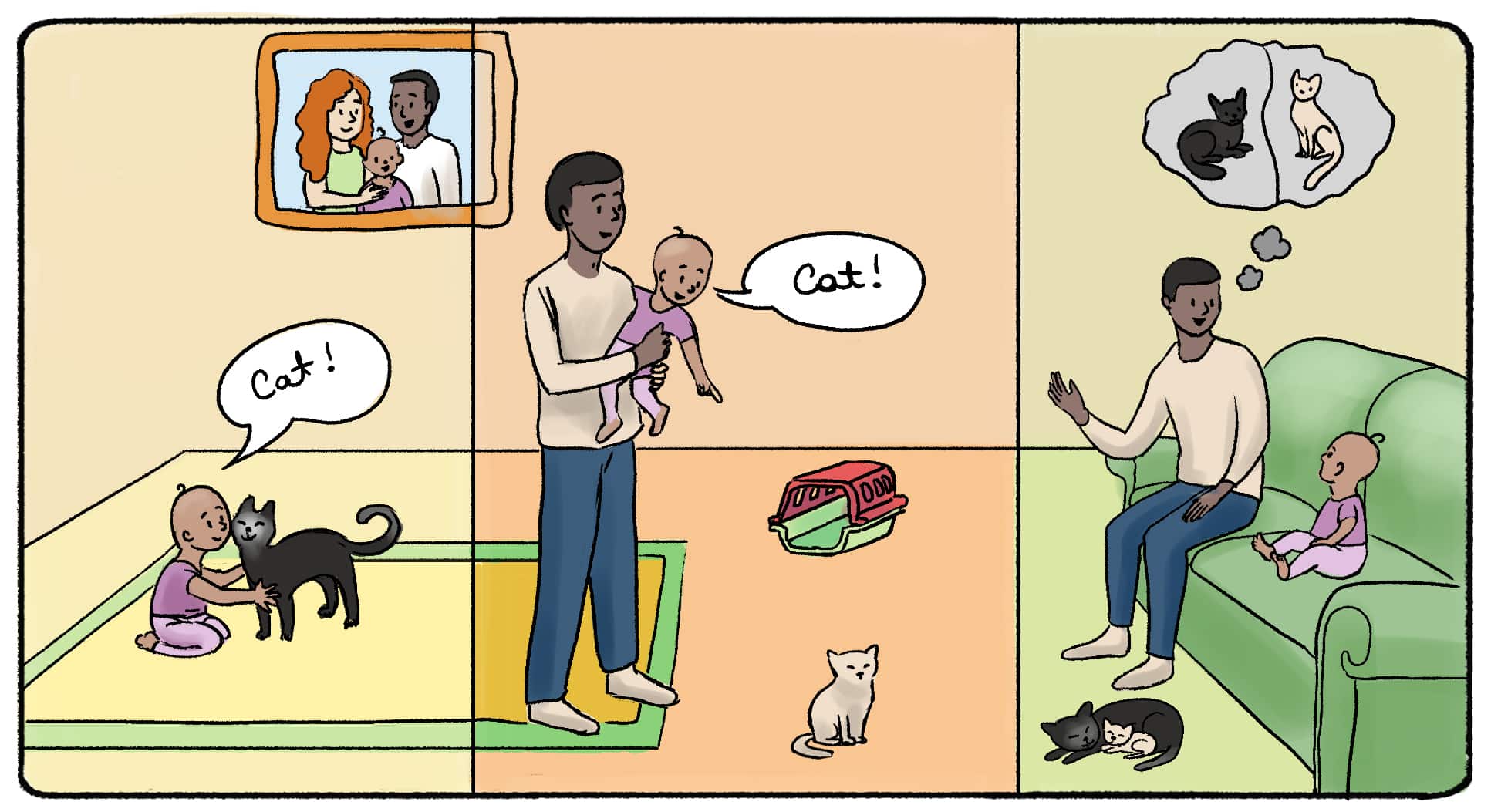
This is accommodation. When you learn new information that challenges schema that has already been built, you may have to dismantle the schema you have and develop new schema to better accommodate this new information. Think of erasing a few notes on an index card, and then grabbing another index card so you can better organize the information that you have.
Accommodation Examples
One classic example of accommodation involves cats and dogs. You are raised with one calico cat, and you know that it is fluffy and has four legs. When you visit your aunt’s house, you encounter a different fluffy, four-legged creature. You pull from your schema and identify the animal as a cat. Not quite - you are told that the fluffy, four-legged creature is a dog. You have to change what you thought you knew about fluffy, four-legged creatures. Cats are no longer identified solely on these characteristics. Information present in the “cat” schema is now given its own schema: fluffy, four-legged animals. As you come across more animals that are fluffy and have four legs, you build a schema for “dog,” “horse,” “guinea pig,” etc.
Here’s another example of accommodation. As a child, you form a schema for a particular group of people. These people are seen as untrustworthy, greedy, and downright evil. You learned to become scared of these people.
Then, much later in life, you are forced to work with people who belong to that group. You interact with them. As you learn more about them, you start to see that the information you had been given was not entirely accurate. You have to rework your schema for this group of people to accommodate the complexities within the group. You may also rework the schema for the people who taught you to not trust this group in the first place.
Our cognitive development does not end when we are children or teenagers. We have the potential to build, organize, and rework the information in front of us every day. These processes can be uncomfortable, especially as we realize that we have been seeing things “incorrectly” for a number of years. This discomfort is normal. Accommodation is normal. Assimilation is normal. They are reminders that you are still capable of growth and change.
The work on discovering how we take in new information did not stop with Jean Piaget. In more recent years, psychologists have begun to uncover a process in which ourentire brain structurechanges with new information. That process? It’s called neuroplasticity. And if you currently believe that skills are “fixed” or our brains stop changing at a young age, you’ve got to read about neuroplasticity.
Neuroplasticity doesn’t see the way we store information as index cards or file cabinets, although that is a great metaphor for the organization of that information. Instead, neuroplasticity looks at the brain as the web of synapses that it is. The connections between these synapses are like the notes on index cards. And as we learn new information, practice skills, and endure new experiences, those synapses move and change.
This is important to know because growth is possible. Change is possible. Assimilation and accommodation don’t end at a young age. Itispossible to teach an old dog new tricks, as the old saying goes! Keep reading, keep learning, and keep trying new things. Your brain will respond and what is possible will continue to expand.
Related posts:Assimilation in Psychology (Definition + Examples)Schemas in PsychologyJean Piaget’s Theory of Cognitive DevelopmentPerceptual Adaptation (Definition + Examples)Piaget’s Theory of Moral Development (4 Stages + Examples)
Related posts:
Reference this article:Practical Psychology. (2020, November).Assimilation vs Accommodation (Definition and Examples).Retrieved from https://practicalpie.com/assimilation-vs-accommodation/.Practical Psychology. (2020, November). Assimilation vs Accommodation (Definition and Examples). Retrieved from https://practicalpie.com/assimilation-vs-accommodation/.Copy
Reference this article:
Practical Psychology. (2020, November).Assimilation vs Accommodation (Definition and Examples).Retrieved from https://practicalpie.com/assimilation-vs-accommodation/.Practical Psychology. (2020, November). Assimilation vs Accommodation (Definition and Examples). Retrieved from https://practicalpie.com/assimilation-vs-accommodation/.Copy
Copy
