In this article, I want to explain a concept in psychology that helps to explain how we take in new information and organize it within the information that we already know. This process is called assimilation. You may have heard the term “assimilation” in classes when talking about immigration or migration. This page isnotabout cultural assimilation. Instead, you will be learning about assimilation in psychology.
What Is Assimilation?Assimilation (Psychology) ExamplesAssimilation vs. AdaptationProcess of Assimilation in Real LifeWhy Is Learning About Assimilation vs. Accommodation Important?Jean Piaget Quotes and Resources
What Is Assimilation?
Assimilation (Psychology) Examples
Assimilation vs. Adaptation
Process of Assimilation in Real Life
Why Is Learning About Assimilation vs. Accommodation Important?
Jean Piaget Quotes and Resources
Assimilation is a cognitive process that takes place when a child acquires knowledge and needs to fit it into what they know. Although the child is learning something new, they are not learning anything that contradicts their current knowledge base. They are simply fitting it into what they already know.
Who Introduced Assimilation to Psychology?
This knowledge fits into what you already know about the world. When you peek into your mind, you can see that you know…
With all of this prior information already in your mind, the assimilation process is easy. Everything you’re hearing about deep breaths and stress relief makes sense with what you already know. So, you pack it away into your knowledge about Yoga, breathwork, and calming down the mind and body.
Although Piaget primarily worked with children, assimilation doesn’t stop when we grow up. Piaget suggested that as we continue to develop our cognitive thinking, we engage in assimilation and other forms of adaptation.
What Are Schemas?
During the early stages of cognitive development, Piaget suggested that a child begins to form schemas. Schemas are frameworks of thought or behavior that organize the information we take in every day. Think of a digital mind map. One section of this mind map may be reserved for what we know about cats. This includes what a cat looks like, the types of cats that exist in the wild, and a domestic cat’s typical behavior. Within the idea of a cat is the idea that cats and dogs do not get along. In a separate area of the mind map is a section about dogs. Piaget’s theory suggests that we have a schema for “cat” and a schema for “dog.”

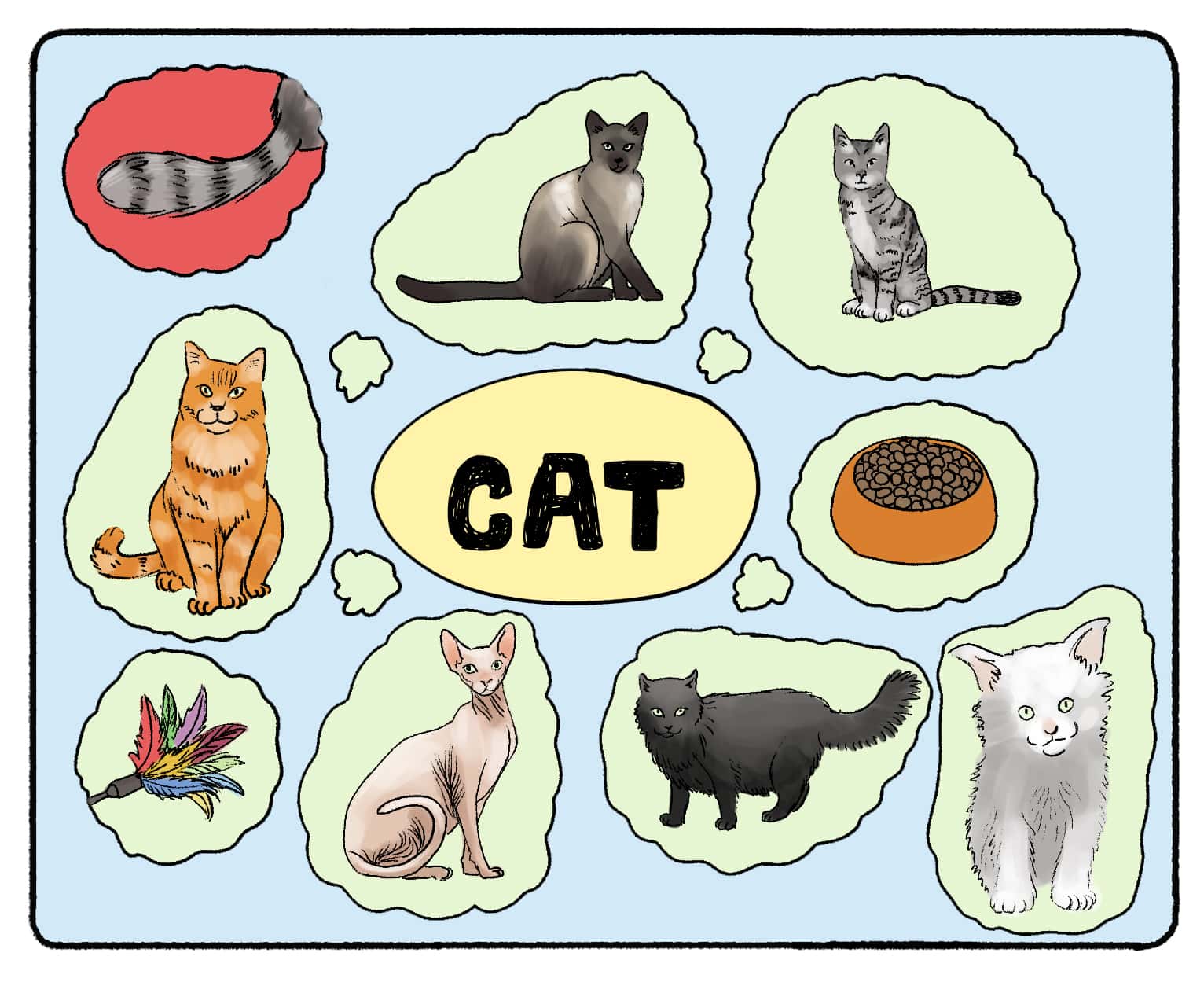
As you grow and learn new ideas, these schemas are bound to expand. You may also change your schema. Where previously you thought all fuzzy animals were cats, you had to make some adjustments to your mind map to account for the idea that not all fuzzy animals are cats.
Adaptation and Schemas
These processes both fall under the umbrella of “adaptation.” Piaget believed that the mind adapted in different ways based on the new information it received.
The three terms underneath the umbrella of adaptation are assimilation, accommodation, and equilibrium.
Assimilation vs. Accommodation
We know what assimilation is. Let’s briefly talk about accommodation and how it differs from assimilation.Accommodationis the process of changing your current schemas to accommodate new information. Think back to the example of thinking all fuzzy creatures are cats. Not so. Once you learn the difference between a dog and a cat, you have to change the schema of what makes a cat a cat. This might mean unlearning that chimpanzees, goats, and foxes are also not cats.
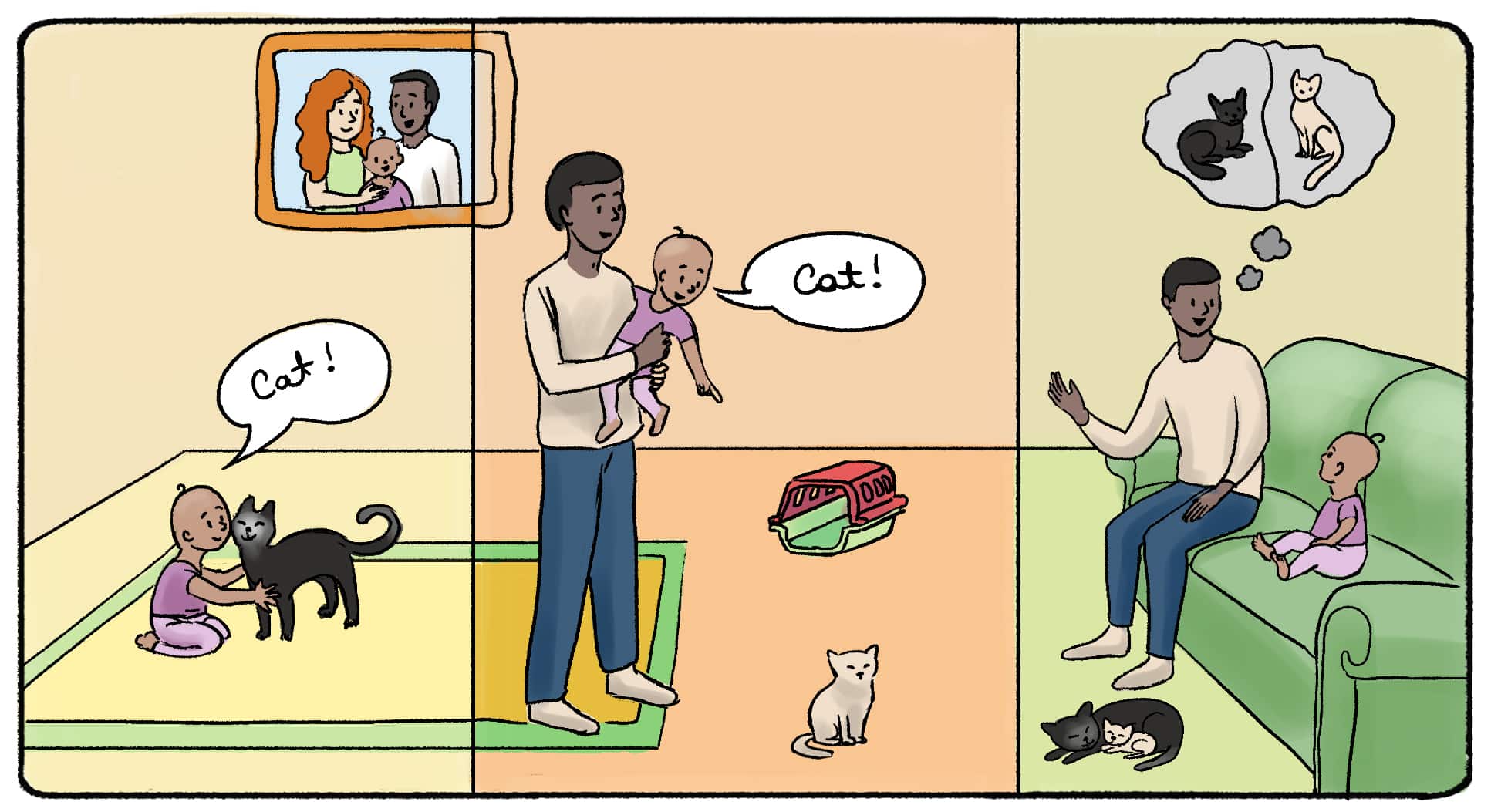
Before accommodation occurs, there is a moment when things feel “off.” You realize that something you had learned previously is not right. This can cause discomfort, known to many as cognitive dissonance.
Piaget called it disequilibrium. He believed that in order to seek new information, we need to feel as though we are in a state of equilibrium. We need to feel as though we’ve got a good grasp on things already, and that all of the new information we have will fit in with what we know already.
Unfortunately, this doesn’t always happen.
Think of the most honest person you know. It could be a friend, a mentor, or a leader. Whoever it is, you know them as a person who regularly tells the truth. You know them to be an honest person with integrity and a good heart.
Now, what would happen if someone tells you that they stole a lot of money? Would you not believe the person sharing this information, based on what you know about your honest friend or leader? Would you explain their acts away as a mistake or an anomaly? Or would you stand back and change your view of this person you admire and know to tell the truth?
What do you do?
Do you push the information aside, allowing nothing to disturb your equilibrium?
Or change your idea about this perfectly honest person, so that in the future you may not believe that they are so honest?
Or do you try to fit the person’s actions into their honest personality, saying that they made a mistake and had honest intentions?
This last option is assimilation, and we are all guilty of using this process instead of the harder, potentially more necessary “accommodation” process. As you take in new information and make judgments about people and current events, ask yourself. Are you changing your old ideas when necessary? Or are you taking the easier way out to stick with what you already believe?
Jean Piaget was one of the most prominent psychologists in the study of cognitive psychology. Cognitive psychology looks at how we perceive the world around us, remember information, or learn new skills. By learning about concepts like accommodation and assimilation, we can better understand how psychologists like Piaget envisioned the mind working.
Reflecting on these processes in our own minds can illuminate how we see the world vs. how others see the world. The child who was raised among friendly cats and dogs may see pets differently than the child who was taught to fear animals. If you grew up in a school with students of the same race or social class, accommodating information about people outside these groups might be a different process from a child who grew up in a diverse neighborhood. There is no “right” or “wrong” way to assimilate or accommodate information, but based on what information you have been taught, new information may lead to you different conclusions about the world around you.
Before we can adapt our ways of thinking and make room for new information, we experience cognitive dissonance. Cognitive dissonance is uncomfortable. Our minds will often naturally avoid it so we can easily assimilate information and move on to the next piece of information. This means that you may encounter information that directly opposes what you currently think, but brush it off as “wrong” and focus on information that confirms your beliefs. If you make a habit of this, you may fail to really understand what is going on in the world around you.
When you encounter uncomfortable information that contradicts your beliefs, be it a headline or someone’s lived experiences, take a moment to pause. Why does the information make you uncomfortable? Is this the reason you feel that you’re discounting the information or brushing it off? What can you do to explore this uncomfortable information? Ultimately, will you accept it or question it further?
There is no right or wrong answer to these questions, but this reflection may illuminate how often you brush off information and where you might want to question your own beliefs.
The concepts of assimilation and accommodation are just one piece of Jean Piaget’s contributions to psychology. His Stages of Cognitive Development influenced how psychologists and educators understand children and their development.
Related posts:Assimilation vs Accommodation (Definition and Examples)Acculturation (Definition + 20 Examples)Piaget’s Theory of Moral Development (4 Stages + Examples)Jean Piaget’s Theory of Cognitive DevelopmentThe Psychology of Long Distance Relationships
Related posts:
Reference this article:Practical Psychology. (2020, June).Assimilation in Psychology (Definition + Examples).Retrieved from https://practicalpie.com/assimilation/.Practical Psychology. (2020, June). Assimilation in Psychology (Definition + Examples). Retrieved from https://practicalpie.com/assimilation/.Copy
Reference this article:
Practical Psychology. (2020, June).Assimilation in Psychology (Definition + Examples).Retrieved from https://practicalpie.com/assimilation/.Practical Psychology. (2020, June). Assimilation in Psychology (Definition + Examples). Retrieved from https://practicalpie.com/assimilation/.Copy
Copy
