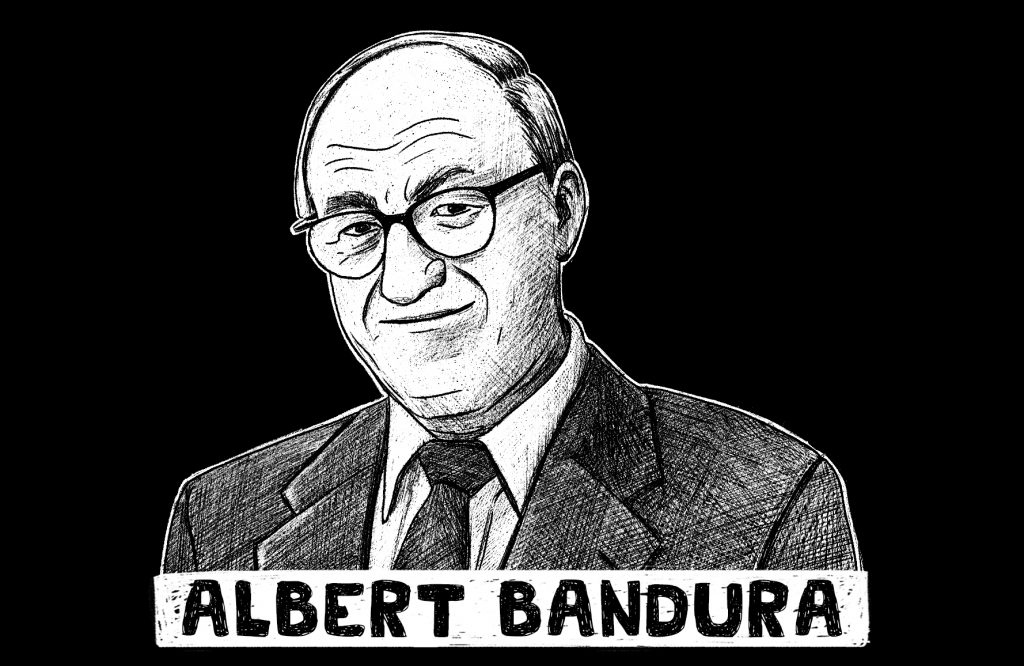
Albert Bandura is perhaps one of the greatest psychologists of all time. He spent most of his career studying and teaching social psychology at Stanford University.
 Albert Bandura
Who is Albert Bandura?Bandura’s Early YearsBandura’s Educational BackgroundSocial Learning TheoryThe Bobo Doll ExperimentsSocial Cognitive Theory and Bandura’s Impact on EducationAlbert Bandura’s Awards and AchievementsAlbert Bandura’s Books and PublicationsPersonal Life
Who is Albert Bandura?
Bandura’s Early Years
Bandura’s Educational Background
Social Learning Theory
The Bobo Doll Experiments
Social Cognitive Theory and Bandura’s Impact on Education
Albert Bandura’s Awards and Achievements
Albert Bandura’s Books and Publications
Personal Life
Albert Bandura is best known for developing social learning theory (later called social cognitive theory), his in-depth research on self-efficacy, the Bobo doll experiments, and his groundbreaking books. He is also widely regarded as one of the most influential psychologists of all time.
Albert Bandura was born on December 4, 1925, in Mundare, Alberta. Bandura’s father was from Poland and his mother was from Ukraine. He also had five sisters who were all older than him.
Bandura’s parents came to Canada when they were teenagers. His father worked for the local railroad company and his mother was employed at the town’s general store. Once the couple had saved enough money, they bought a homestead on a heavily wooded piece of land. In time, they developed a workable farm after removing enough trees and boulders from the property.
Neither Bandura’s father nor his mother received formal schooling. Nevertheless, they both viewed education as very important. In addition to English, Bandura’s father taught himself to read Polish, German, and Russian. He also played the violin and served on the district school board.
Although Bandura’s family faced many financial struggles during his childhood, they had a very positive outlook on life. They were known to be hardworking, helpful, and festive people.
During Bandura’s early years, there was only one school in town—the Mundare Public School. This single institution provided him with both his elementary and high school education. As you may expect, the school had very limited resources. Nevertheless, Bandura made the most of his circumstances until he graduated in 1946.
Although the lack of books and teachers may not have been ideal, it did lead to some positive developments. The students at the Mundare Public School were required to take charge of their own education. For Bandura and many of the other students, the situation actually served them quite well. Bandura himself stated, “very often we developed a better grasp of the subjects than the overworked teachers."
Where Did Albert Bandura Receive His Bachelor’s Degree?
In 1949, just three years after he arrived, Bandura graduated from the University of British Columbia. At his graduation, he was presented with the Bolocan Award in Psychology. As Bandura was eager to pursue graduate studies in psychology, he asked his academic advisor what his next step should be. His advisor encouraged him to enroll at the University of Iowa, which at the time, was considered the epicenter of theoretical psychology.
Before Bandura departed for the University of Iowa, his advisor warned him that many previous candidates had found the doctoral program to be difficult. He encouraged Bandura to show toughness and resilience. At the time, the Department of Psychology was under the direction of Kenneth Spence, a protege of Clark Hull. When Bandura enrolled, he found the Department of Psychology to be challenging, but also hospitable and supportive.
After he received his doctoral degree, Bandura was offered a teaching position at Stanford University in 1953. He accepted the offer, although it meant he had to resign from another position he had previously agreed to fill. Much of his early work on social learning theory and aggression was conducted with the help of Richard Walters—his first doctoral student. Bandura continued to work at Stanford University until his death.
There are three basic types of modeling stimuli—live models, verbal instructions, and symbolic models. Live models involve real people doing the desired behavior. Verbal instructions are detailed descriptions of the desired behavior with steps explaining how to do it. Symbolic modeling uses the media and includes the internet, movies, television, books, or radio.
Modeling is dependent on four factors: (1) attention, (2) retention, (3) reproduction, and (4) motivation. All four factors need to be at a high level for modeling to be effective. This means an individual is more likely to learn if he or she:
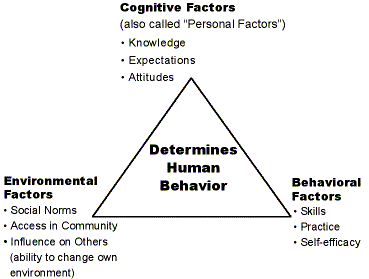
Bandura eventually developed a concept called “reciprocal determinism.” This theory suggests there are three factors that influence behavior: (1) the environment, (2) the individual’s cognitive processes, and (3) the behavior itself. These three factors are always interacting with each other. So while it is true that society can influence behavior, a person’s actions, thoughts, feelings, and personal characteristics can also impact the way he or she interacts with society.
To get a better idea of what reciprocal determinism means, it may be helpful to think of a young boy who loves to play soccer. He plays because he believes the sport is fun or soccer may be a popular sport in his community. After a while, he asks his close friends and family members to play soccer and have fun with him. This in turn, encourages him to play soccer even more.
Bandura refined the concept of Social Learning Theory over the course of many years. An important part of his research on Social Learning Theory were the Bobo Doll Experiments (outlined below). By 1977, Bandura had settled on five key principles of Social Learning Theory:
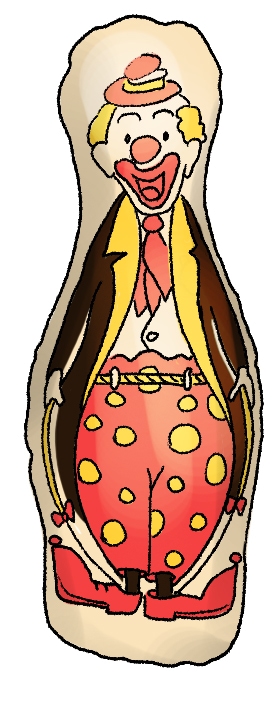
In 1961 and 1963, Bandura conducted a series of studies called theBobo Doll Experimentsto test his Social Learning Theory. He noted how children responded after they watched an adult punch, kick, throw, hit, and scream at a Bobo doll. A Bobo doll is a large, light-weight toy with a round bottom that gets back up after it is knocked down. One notable version of the experiment measured the children’s behavior after they saw the adult get rewarded, get punished, or experience no consequence for abusing the Bobo doll.
Results of the Bobo Doll Experiment
Criticism and Praise of Bobo Doll Experiment
Of course, a number of criticisms have been aimed at the Bobo Doll Experiments. Some people question its validity because the majority of the children were from high-class, white families. Other people questioned the ethics of intentionally exposing young children to violence. But despite these controversies, most people laud the Bobo Doll Experiments as one of the most important psychological studies in history. Albert Bandura wasawarded the National Medal of Sciencefrom President Barack Obama in 2016 for the experiment.
At 60 years old, Bandura was still heavily involved in groundbreaking research. By the mid-1980s he had begun to focus more on the role of human cognition in social learning. In 1986, he changed the name of the Social Learning Theory to Social Cognitive Theory. By applying some of the principles of Social Cognitive Theory, Bandura was able to help many people in the field of education.
A few of the key elements of Social Cognitive Theory that are applied in education include self-efficacy, observational learning, self-regulation, and reciprocal determinism. In an educational or school setting, self-efficacy is the confidence a teacher or student has to do what it takes to reach his or her academic goals. Bandura believes that seeing other people work hard to complete a task raises self-efficacy. According to Bandura, observers will reason if these other people can work hard and find success, I can work hard and be successful too.
Bandura’s work on Social Cognitive Theory has been applied to many other fields besides education. Some of the more popular applications include:
Albert Bandura has accomplished much in his long and distinguished career in psychology. In addition to the doctoral degree he earned at the University of Iowa, he has also been awarded more than sixteen honorary degrees from institutions around the world. These institutions include:
Other notable awards and accomplishments include:
Albert Bandura was a prolific author of books and articles throughout his career. His first paper was published in theJournal of Abnormal and Social Psychologyin 1953. It was titled “‘Primary’ and ‘Secondary’ Suggestibility.” Many of his publications are considered as classics in the field psychology. Some of his most impactful books and articles are listed below:
Social Learning Theory(1977) - This book has been credited as changing the direction of psychology from a behavioral focus to a cognitive focus. It highlighted how people learn through observation and modeling.
Self-Efficacy: Toward a Unifying Theory of Behavioral Change(1977) - This article introduced the concept of self-efficacy. It was published inPsychological Reviewand became an instant classic.
Social Foundations of Thought and Action: A Social Cognitive Theory(1986) - A landmark book that expands upon Social Learning Theory and introduces Social Cognitive Theory.
Self-Efficacy: The Exercise of Control.(1997) - This book has been published in English, French, Chinese, Italian and Korean. It is widely cited in the professional literature of sociology, psychology, medicine, and management.
Bandura’s other books include:
Albert Bandura is the most cited psychologist alive today. He is also the fourth most cited psychologist of all time, behind only B.F. Skinner, Sigmund Freud, and Jean Piaget.
Albert Bandura married his wife, Virginia, in 1952. They first met at the University of Iowa, where Virginia was an instructor at the College of Nursing. They have two daughters, Carol and Mary, and identical twin grandsons named Timmy and Andy. In 2011, Virginia Bandura passed away peacefully at the age of 89.
Is Albert Bandura Alive Today?
Albert Bandura died from congestive heart failure in 2021 at the age of 95. Up until his death, Bandura enjoyed hiking in the Sierra Mountains, walking through the coastal regions of California, dining at restaurants, going to the San Francisco Opera, and drinking a good bottle of wine.
Related posts:Albert Bandura’s Bobo Doll Experiment (Explained)40+ Famous Psychologists (Images + Biographies)Observational LearningAlbert Ellis Biography - Contributions To PsychologyThe Little Albert Experiment
Related posts:
Reference this article:Practical Psychology. (2020, March).Albert Bandura (Biography + Experiments).Retrieved from https://practicalpie.com/albert-bandura/.Practical Psychology. (2020, March). Albert Bandura (Biography + Experiments). Retrieved from https://practicalpie.com/albert-bandura/.Copy
Reference this article:
Practical Psychology. (2020, March).Albert Bandura (Biography + Experiments).Retrieved from https://practicalpie.com/albert-bandura/.Practical Psychology. (2020, March). Albert Bandura (Biography + Experiments). Retrieved from https://practicalpie.com/albert-bandura/.Copy
Copy
