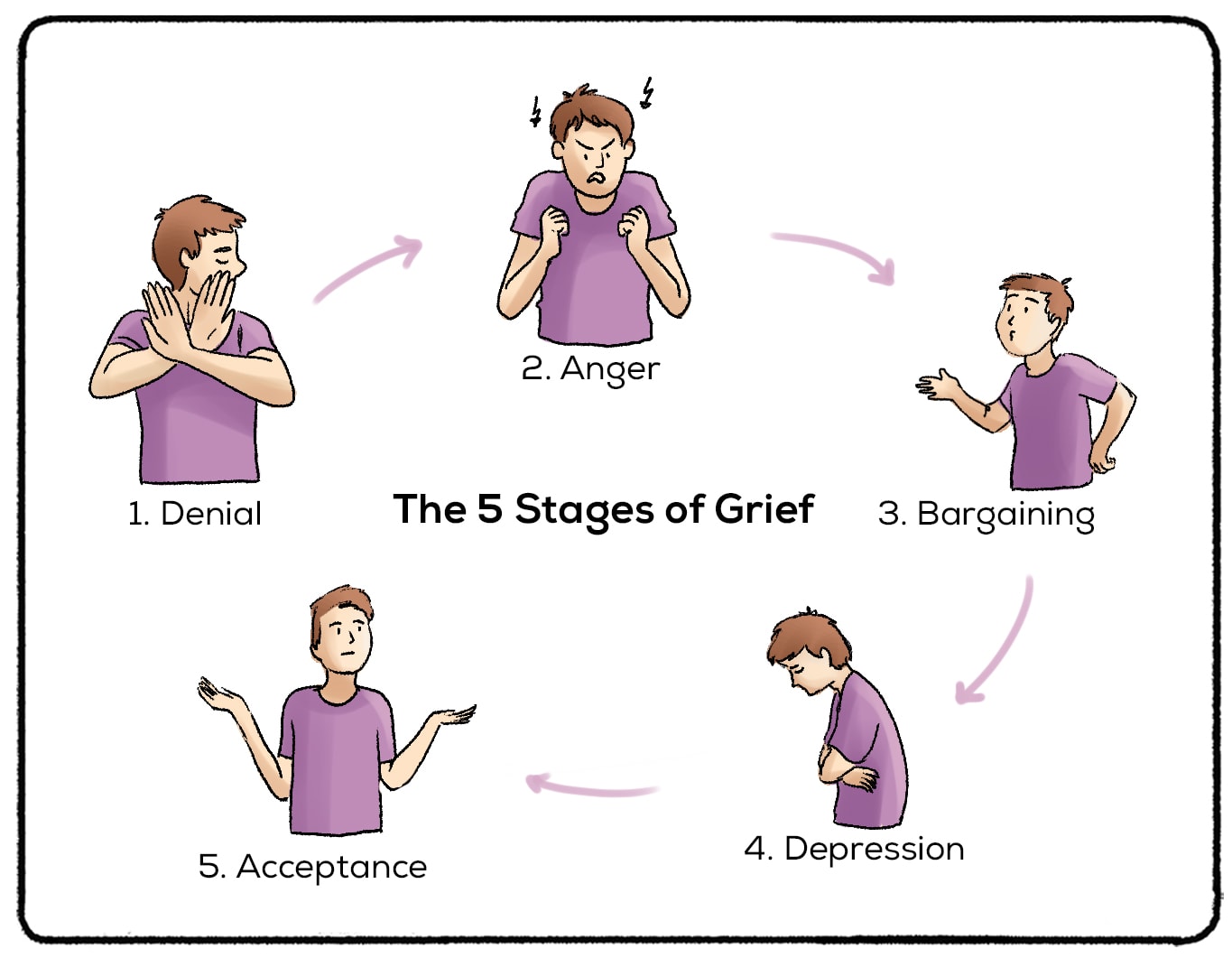
Grief is not just one emotion. Grieving a person’s death, for example, may take weeks, months, or even years. During this time, you may experience grief through different emotions. These emotions are laid out in the five stages of grief. While many of the emotions associated with grief have a negative connotation, they may be necessary or even helpful to the person in mourning.
Who Created The Stages of Grief?What is “Grief?“Can You Go Through the Five Stages of Grief After a Relationship Ends?The Five Stages of Grief Are…Breaking Down the Five Stages of Grief (With Examples)Are the Stages of Grief Linear?Quotes About GriefAlternative Stages of Grief
Who Created The Stages of Grief?
What is “Grief?”
Can You Go Through the Five Stages of Grief After a Relationship Ends?
The Five Stages of Grief Are…
Breaking Down the Five Stages of Grief (With Examples)
Are the Stages of Grief Linear?
Quotes About Grief
Alternative Stages of Grief
The five stages of grief are also known as the Kübler-Ross model. Elisabeth Kübler-Ross was a Swiss-American psychiatrist whose work centered around terminally ill patients. In 1969, she wroteOn Death and Dying, which introduced the five stages of grief.
Grief is a response to loss. Often, this “loss” is death: death of a loved one, a pet, etc. But people may also experience loss in other ways. When COVID shut the world down, people went through immense grief as a response to the loss of normalcy. When people lose their job, they can go through grief. Moving houses can cause immense grief, even though it is so normalized. If a person steps away from a religion that doesn’t serve them or a friendship that isn’t benefiting them, they too may experience grief. Grief is certainly more than just mourning a dead relative.
Yes! Since its publication, Kübler-Ross has stated that the five stages of grief could be applied to anyone experiencing grief. And this includes grieving abreakup, the loss of a job, the death of a loved one, etc.

Denial
The first stage in this model is denial. This stage can be especially troubling for family and friends of the person grieving because it often doesn’t reflect reality. Friends and family may feel frustrated with a loved one who is in denial. They may also worry that the weight of their loss may come crashing down on the person at any minute. But we enter this stage of denial to prevent the weight of loss to come crashing down on us.
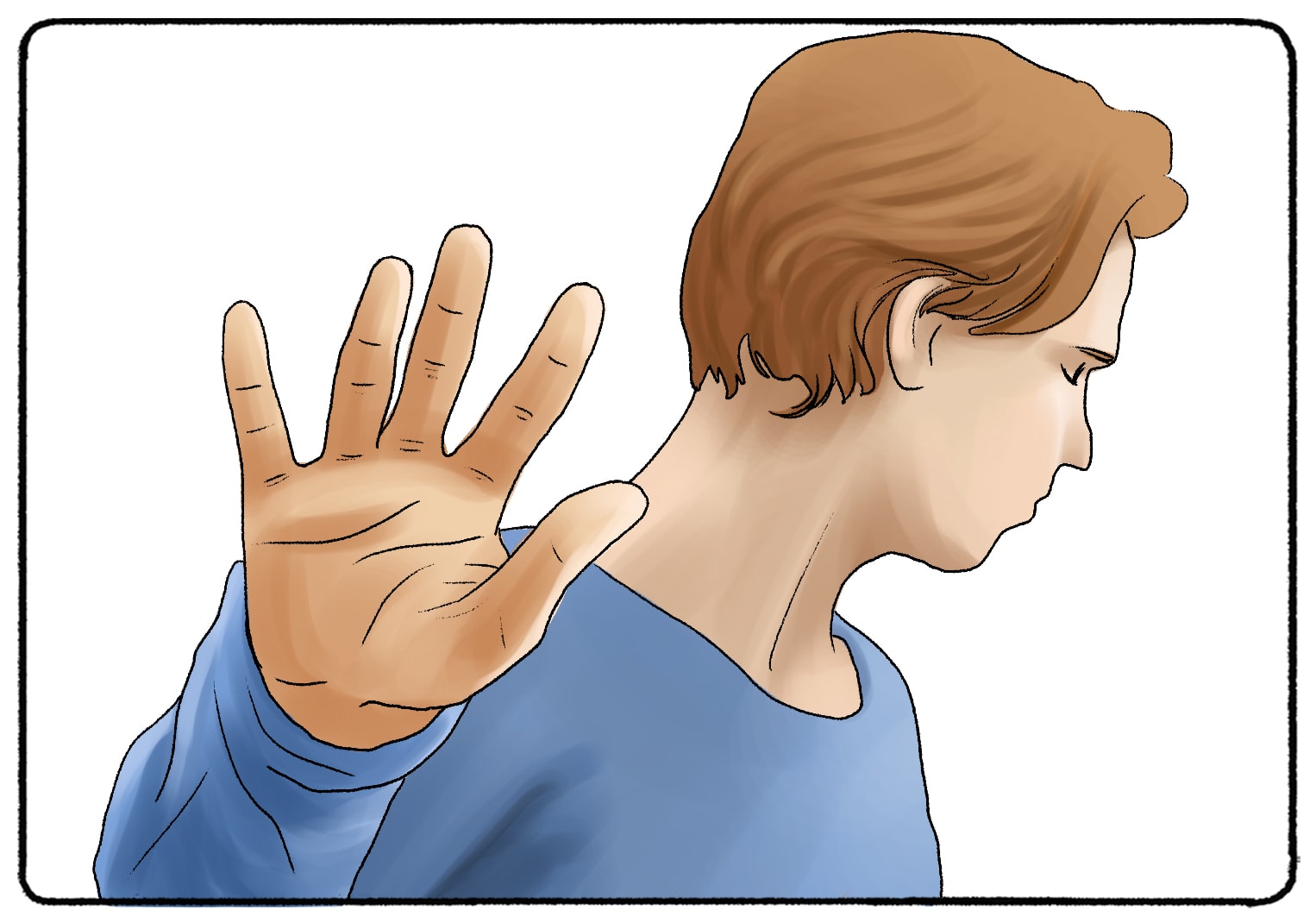
Denial is often thought of as adefense mechanism, or a way to “dose” the overwhelming feelings of loss. We may use the analogy of a coffee drinker. A coffee drinker can handle a few sips of caffeinated coffee at a time, but the idea of chugging a whole pot at once can be unpleasant and unhealthy. In the same way, denial allows us to “sip on” the feelings of grief without letting it overwhelm us completely.
Denial becomes unhealthy only when it prevents someone from moving through the other stages of grief. At some point, a person will have to face the reality of their loss and process their emotions accordingly. It’s certainly painful, but it’s the only way to move through grief and come out a stronger and more accepting person.
A friend who has lost their parent may refuse help from you or your friends, claiming that they are “fine.” They may pretend that the loss will not make a huge impact on their life, that their feelings of grief are not intense or nonexistent, or even that they are happy for the loss.
Anger
The next stage of grief is anger. This is another feeling that prevents us from addressing grief head-on. We may transform our grief into anger and direct it toward the person who we lost, the world at large, or even things that have nothing to do with the loss.
Anger allows us to work through emotions without being completely vulnerable. Unfortunately, this can cause tension for friends and family who may not be grieving as intensely. Anger can push away the people who are here to support us through this time.
Again, anger is natural, but can become unhealthy. But once the anger is exhausted, a person can face their emotions head-on and ask for help.
Say you are grieving the end of a relationship. You may direct your anger at your ex. Maybe you are grieving the loss of a family member to cancer. You may direct your anger at the cancer itself, the healthcare system, the doctors, your higher power, etc.
Bargaining
Bargaining is the third step of grief. During the stages of denial and anger, we avoid vulnerability. But a person grieving cannot avoid being vulnerable for long. Bargaining is a person’s last-ditch effort to regain control over their situation and avoid vulnerability.
When someone is in the “bargaining” stage, they are attempting to explain the loss or “make a deal” in order to avoid the loss altogether.
Like denial, this can help to slow the overwhelming feelings that come with loss. Humans are meaning-making creatures, and therefore have a natural inclination to “make sense” of loss. Unfortunately, sometimes these losses cannot be explained.
Bargaining looks very different among people who are religious or not religious. A classic example of bargaining is begging to God for the grief to end. They may say that they’ll never cheat or never skip church again, only if God can give them their loved one back.
But bargaining is not limited to the religious. Other examples of bargaining include:
Depression
Depression is the fourth stage of grief, but it’s the one that we most commonly associate with loss and the grieving process. During this stage, the person faces their loss head-on. They become vulnerable and feel overwhelmed with sadness.
Again, while this is natural for someone experiencing grief, it can be dangerous.Depressionmay lead to suicide or other destructive behaviors. If you or someone you know is experiencing suicidal thoughts, call the National Suicide Prevention Hotline (1-800-273-8255) today and speak to a counselor.
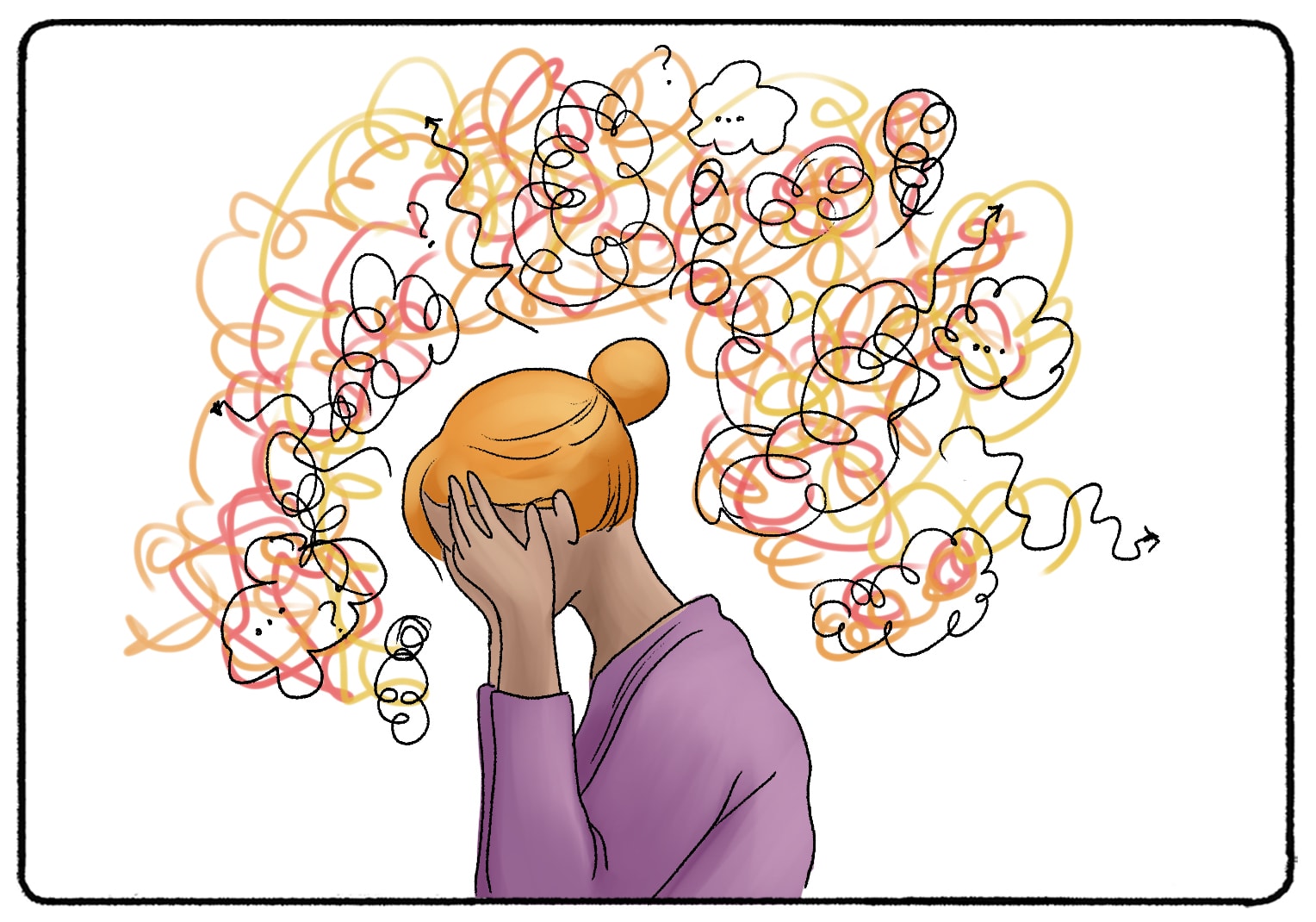
To an outsider, depression can appear to be the quietest of all the stages. A person who is depressed may choose to isolate themselves from others. Socializing, joking, or even getting out of bed can feel too exhausted for someone experiencing depression.
Acceptance
Fortunately, there is light at the end of a dark tunnel. The final stage of grief is acceptance. Acceptance doesn’t equate to happiness or complete healing. They are just ready to move forward with their life, knowing that these changes may have changed the direction of their life or will impact their life moving forward.
A person who is grieving may still miss their loved one. A person who is dying of a terminal illness may still fear what is to come. But the grieving person accepts their loss and begins to move forward while acknowledging the reality of the situation. There is little effort made to change that reality, even if the reality is painful.
Just because a person has begun to accept their reality doesn’t mean the grieving process is “done.” Denial, anger, or any of the other stages may still be present after a person has entered acceptance. It is also normal for a person to experience these stages “out of order.”
How a person experiences grief depends on many factors. Their previous experience with grief may help them move through the process. Societal pressures to “be fine” may hinder the acceptance of many emotions associated with grief. Access to resources, support groups, or vulnerability may also change the way a person looks at grief. There is no one way to grieve a relationship, a death, or another type of loss. If you are experiencing grief, know that it is most important to be mindful of your feelings and do what is best for your healing process.

Kübler-Ross’s model was developed as she observed and worked with people experiencing terminal illnesses. She did not conduct experiments or gather evidence to back up the existence of the model. Since 1969, studies on the five stages of grief have offered conflicting opinions.
Other psychologists have offered additional or alternative stages of grief. David Kessler co-authored a book with Kübler-Ross titledOn Grief and Grieving. In 2019, he proposed that there was a sixth stage of grief: meaning.
Related posts:Beck’s Depression Inventory (BDI Test)Anger Issues Test (Signs + Guide)The Psychology of Long Distance RelationshipsThe Emotion Wheel (9 Wheels + PDF + How To Use)Operant Conditioning (Examples + Research)
Related posts:
Reference this article:Practical Psychology. (2020, May).5 Stages of Grief (Definition + Examples).Retrieved from https://practicalpie.com/stages-of-grief/.Practical Psychology. (2020, May). 5 Stages of Grief (Definition + Examples). Retrieved from https://practicalpie.com/stages-of-grief/.Copy
Reference this article:
Practical Psychology. (2020, May).5 Stages of Grief (Definition + Examples).Retrieved from https://practicalpie.com/stages-of-grief/.Practical Psychology. (2020, May). 5 Stages of Grief (Definition + Examples). Retrieved from https://practicalpie.com/stages-of-grief/.Copy
Copy
