Today we’re diving into a topic that’s got a lot of people talking: socialism in America.
Some folks think it’s a great way to make sure everyone gets a fair shot at success. Others worry that it could slow down hard work and innovation. Either way, it’s a topic that sparks big debates.
Ready to explore both sides of the debate? Great! We’ll also share some real-life examples of socialism right here in the U.S., from the schools we learn in to the roads we drive on. Let’s get started!
What is Socialism?History of SocialismAmerica’s Founding Principles and SocialismDebates Around Socialism in AmericaExamples of Socialism in America1) Social Security: A Safety Net for the Elderly2) Medicare and Medicaid3) Public Education4) Public Libraries5) Police and Fire Departments6) The Post Office7) Public Transportation8) Infrastructure9) Food Assistance Programs10) Unemployment Benefits11) National Parks and Museums12) Veterans Benefits13) Affordable Housing Programs14) Pell Grants15) Federal Student Loans16) Agricultural Subsidies17) Public BroadcastingConclusion
What is Socialism?
History of Socialism
America’s Founding Principles and Socialism
Debates Around Socialism in America
Examples of Socialism in America
Social Security: A Safety Net for the Elderly
Medicare and Medicaid
Public Education
Public Libraries
Police and Fire Departments
The Post Office
Public Transportation
Infrastructure
Food Assistance Programs
Unemployment Benefits
National Parks and Museums
Veterans Benefits
Affordable Housing Programs
Pell Grants
Federal Student Loans
Agricultural Subsidies
Public Broadcasting
Conclusion
 socialist George Washington
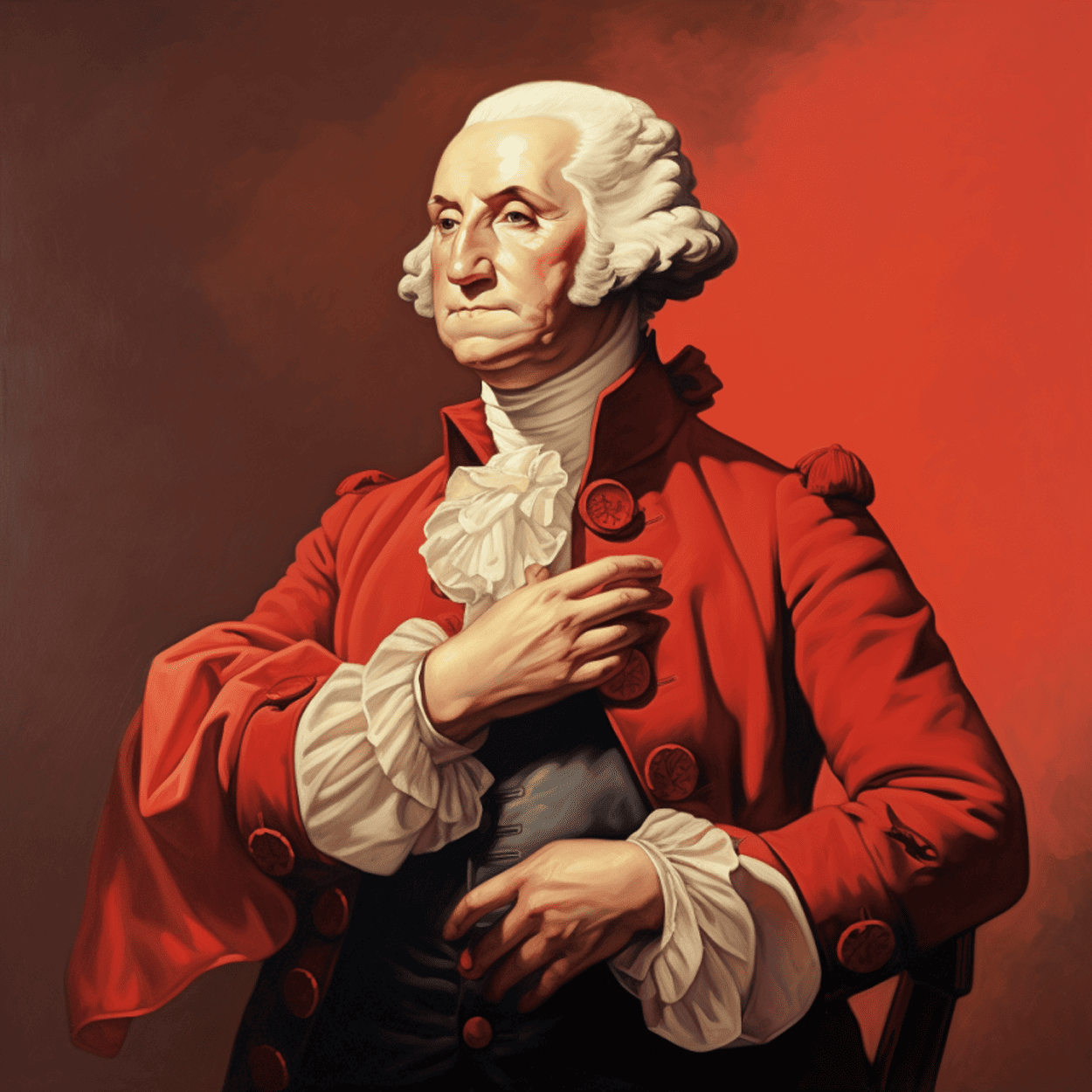
At its core, socialism is an economic and political idea. It’s all about making sure wealth and power are shared more evenly among everyone. Think of it like a team sport—instead of just one superstar carrying the whole team, everyone works together and shares the glory (and the trophies!).
Simplified Definition of Socialism
Capitalism vs. Socialism
You’ve probably heard of capitalism, too. It’s another economic system but with a different game plan. In capitalism, individual people or companies own and run businesses. They aim to make as much money as possible, and there’s a lot of competition. Imagine a race where everyone is sprinting to the finish line to grab a prize. That’s a bit like capitalism.
Socialism, on the other hand, is more like a relay race. Everyone has to do their part, and the team wins or loses together. In socialism, the focus is less on racing to get rich and more on making sure everyone has what they need, like healthcare, education, and a safe place to live.
Core Principles
In a socialist system, there’s an effort to make sure nobody is super-rich while others are super-poor. In other words, thesocial and economic classesare supposed to level out, rather than having extreme rich people or extreme power next to very poor people who have no power. The goal is to level the playing field. Here are some common socialist principles:
The Socialism Spectrum
Socialism isn’t just one thing; it’s like a rainbow with different shades. On one end, you have “pure socialism,” where the government controls all parts of the economy. On the other end, there’s “social democracy,” which mixes some socialism with capitalism. Think of it like making a smoothie: you can add different fruits and flavors to make it just how you like it.
In America, we often talk about “Democratic Socialism.” This is a kind of social democracy that focuses on democratic ways of making decisions and blending capitalism with more social programs, like free healthcare or tuition-free college.
Early Influence: The European Connection
You might say that socialism in America had “pen pals” in Europe. It wasn’t a homegrown idea but came from thinkers in Europe during the 19th century. Big names like Karl Marx and Friedrich Engels wrote a book called “The Communist Manifesto” in 1848. They dreamed of a world where workers were treated fairly, and everyone shared the goodies.
American Pioneers: Planting the Seed
It’s impossible to talk about American socialism without mentioning Eugene V. Debs. Born in 1855 in Indiana, Debs was like the captain of the American socialist team. Not only did he co-found theAmerican Socialist Partyin 1901, but he also ran for President five times! Although he never won, Debs made a lasting impact. At his peak, he got almost a million votes in the 1912 election. That was a big deal!
But Debs wasn’t the only one planting socialist seeds. People likeEmma GoldmanandBig Bill Haywoodwere also important in spreading the word. Goldman was big on women’s rights and was known for her powerful speeches. Haywood was a labor leader who fought hard for workers.
The First Parties: Getting Organized
Founded in 1901, the Socialist Party of America was like the first official team of socialists in the U.S. They started running candidates for local offices, and guess what? They won some! By 1912, over 1,000 socialists held office in 340 cities.
Also known as the “Wobblies,” this group was another early player in American socialism. Founded in 1905, they aimed to unite all workers into one big union and often staged strikes to get better conditions for workers.
The 20th Century: Ups and Downs
The 1930s were tough. Families were suffering, and jobs were scarce. President Franklin D. Roosevelt (FDR) introduced theNew Deal, and some of these ideas had a socialist flavor. Programs like Social Security started, which gives money to older people and others who can’t work. Also, the Civilian Conservation Corps (CCC) was formed to give young men jobs and conserve natural resources.
During World War II, the United States was an ally with the Soviet Union against a common enemy: Nazi Germany. But after the war, the friendship soured. The Cold War began, and America’s feelings about socialism got complicated.
From the late 1940s to the early 1990s, the U.S. and the Soviet Union were like two players in a never-ending chess game, each worried the other would make a wrong move. This period was called the Cold War. During this time, being a socialist in America was often viewed with suspicion.
The Modern Era: The Comeback Kids
Jump to the 2010s, and a senator from Vermont named Bernie Sanders brought socialism back into the spotlight. He ran for President in 2016 and 2020 and talked about ideas like “Medicare for All” and free college tuition.
AOC, as she’s commonly called, is another big name in modern American socialism. Elected to Congress in 2018, she’s part of a younger group bringing fresh energy to socialist ideas. She’s known for theGreen New Deal, a plan to fight climate change and create jobs at the same time.
AOC isn’t alone. She’s part of a group in Congress known as “The Squad,” which includes Ilhan Omar, Rashida Tlaib, and Ayanna Pressley. Together, they push for socialist-leaning policies, like a higher minimum wage and more affordable housing.
The Public Opinion: What Do People Think Now?
Recent polls show that younger Americans are pretty interested in socialism. According to aGallup poll in 2020, about 49% of adults aged 18-39 said they viewed socialism positively.
On the flip side, older Americans are generally not fans of socialism. According to the same Gallup poll, only about 28% of Americans over 55 viewed socialism in a good light.
Liberty and Justice for All
One of the big ideas when America was founded was “liberty.” Liberty means having the freedom to live your life the way you want, as long as you’re not hurting anyone else. Another important idea is “justice,” or making sure everyone is treated fairly. These principles are written down in some of America’s most important documents, like the Declaration of Independence and the Constitution.
Individualism: The American Dream
The Role of Government: To Help or Not to Help?
One of the biggest questions Americans have been asking since the country started is, “What should the government do?” Should it help people who are struggling, or should it take a step back and let individuals handle things? This is where socialism becomes a hot topic. Programs that aim to help everyone, like public schools and healthcare, often get called socialist.
Checks and Balances: Can Socialism Fit?
America’s government was designed with a system called “checks and balances.” This means no one person or group can have too much power. Some people argue that socialism gives too much power to the government, but others say that democratic forms of socialism still fit within America’s system of checks and balances.
The First Amendment: Free to Discuss
Guess what? The fact that we’re even talking about socialism is thanks to another founding principle: freedom of speech. The First Amendment allows us to discuss and debate all kinds of ideas, even ones that are super controversial, like socialism.
Equality vs. Equity: A Balancing Act
One last thing to consider is the difference between “equality” and “equity.” Equality means treating everyone the same, while equity means giving everyone what they need to be successful. Socialism leans more towards the idea of equity, trying to level the playing field so that everyone has a fair shot.

Public Opinion: A House Divided
The word “socialism” can really get people talking! And guess what?Not everyone agrees.In fact, socialism is a topic that can divide a room into two sides faster than you can say “Uncle Sam.” Polls show that younger people are warming up to it, while many older folks are not so keen.
Big Government or Big Problems?
One of the biggest debates about socialism is the role of the government. Critics say that socialism means Big Government, where the government gets to make lots of decisions for you. They argue this takes away your freedom to choose. Supporters say the government should help solve Big Problems, like poverty and healthcare.
Money Matters: Taxes and Spending
Let’s talk about money. One argument against socialism is that it costs a lot. To pay for things like free healthcare and education, taxes would have to go up. Critics worry this could slow down the economy. Supporters argue that the benefits are worth the cost, and they point to countries like Sweden and Denmark as examples.
Healthcare: A Right or a Privilege?
The debate gets really heated when it comes to healthcare. Some people believe healthcare is a human right and should be available to all, just like public education. Others say it’s a service that you should pay for, just like anything else.
Jobs and Wages: Fair or Unfair?
Socialism also sparks debates about jobs and pay. Should there be a minimum wage that’s high enough to live on? Critics say higher wages mean businesses will hire fewer people. Supporters say a living wage is a matter of fairness.
A Global Look: Other Countries' Experiences
When talking about socialism, people often look at other countries for examples. Critics point to Venezuela as a warning of how socialism can go wrong. Supporters point to countries in Europe, like Sweden, where socialist policies seem to be working well.
The Role of Business: Free Market vs. Regulation
Last but not least, let’s talk about businesses. In a capitalist system, businesses are free to do what they want to make a profit. In a socialist system, there are more rules to make sure businesses are fair to workers and customers. This is a big area of debate, too.
In the end, it doesn’t have to be all one or the other.Socialism versus Capitalism isn’t an ultimatum. Let’s get into some examples of socialism in America, a traditionally capitalist country.
The Social Security program, started in 1935 as part of FDR’s New Deal, offers financial support to retired folks and others who can’t work. You and your employer pay into it your whole working life, and then you get to benefit from it when you’re older.
Medicare and Medicaid are government-run programs that help people pay for healthcare. Medicare mostly helps people over 65, while Medicaid helps low-income families. These programs were created in the 1960s and are a big part of the healthcare system today.
The United States Postal Service (USPS) is a government-run mail service. It delivers letters and packages across the country, often at lower rates than private companies because it’s subsidized.

Ever drive on a highway or cross a bridge? Chances are, those were built with public money. Governments use tax dollars to build and maintain things like roads, bridges, and public buildings.
Pell Grants are government-funded grants that help low-income students pay for college. Unlike loans, they don’t have to be paid back.
These are government-backed loans with lower interest rates to help students afford higher education. They have to be paid back, but the terms are often more favorable than private loans.
The government often gives money to farmers to help them produce food more affordably. This helps stabilize food prices and keeps farming jobs in place.
And there you have it—a comprehensive list of socialist elements or programs that have been part of the American fabric for years, some even since the country’s founding. These examples show that while the United States is primarily a capitalist country, socialist ideas have found their way into various aspects of American life.
Wow, we’ve covered a lot of ground! From the history of socialism to America’s founding principles, and all the debates and examples in between, it’s clear that socialism is a topic that gets people talking—and sometimes even arguing.
What we’ve learned is that socialism isn’t a simple “yes or no” question in America. Our country was built on principles like liberty and justice, but that doesn’t mean everyone agrees on how to put those ideas into action.
Some folks think socialist programs, like public schools and healthcare, fit right in with America’s goals. Others worry that these kinds of programs might change what America is all about.
And let’s not forget all the examples we talked about! Even if you’ve never used the word “socialism,” you’ve probably been part of a socialist program at some point. Ever mailed a letter at the post office? Taken out a library book? Ridden a public bus? Then you’ve experienced a little bit of socialism right here in the U.S.A.
So, the next time someone brings up socialism, remember: it’s not a one-size-fits-all idea. It’s a complex tapestry that’s woven into many parts of American life, whether we notice it or not. And as long as we keep talking, debating, and voting, that tapestry will keep changing and growing, just like America itself.
Related posts:47+ Blue Collar Job Examples (Salary + Path)19+ Reasons College Should be Free (Pros and Cons)41+ White Collar Job Examples (Salary + Path)47+ Social Injustice Examples (History + Solutions)47+ Social Problem Examples (Issues In Society)
Related posts:
Reference this article:Practical Psychology. (2023, September).15+ Socialism Examples in America (Principles+ History).Retrieved from https://practicalpie.com/socialism-examples-in-america/.Practical Psychology. (2023, September). 15+ Socialism Examples in America (Principles+ History). Retrieved from https://practicalpie.com/socialism-examples-in-america/.Copy
Reference this article:
Practical Psychology. (2023, September).15+ Socialism Examples in America (Principles+ History).Retrieved from https://practicalpie.com/socialism-examples-in-america/.Practical Psychology. (2023, September). 15+ Socialism Examples in America (Principles+ History). Retrieved from https://practicalpie.com/socialism-examples-in-america/.Copy
Copy
