In the fast-paced world of job interviews, making a good impression isn’t about listing qualifications; it’s about showing your unique strengths. Every individual possesses a specific set of strengths that can make them stand out.
Strengths are qualities or abilities that enable a person to perform tasks better than other people.They’re rooted in our personalities, experiences, training, and natural abilities.
Whether you’re looking to build your resume or learn how to share your abilities in an interview, understanding your strengths can make you stand out. In this article, we will journey through various examples of strengths that you might not have even recognized in yourself.
Understanding Personal StrengthsWhy Interviewers Ask About Strengths and WeaknessesExample AnswersInterpersonal SkillsTechnical AbilitiesProblem-Solving & Critical ThinkingLeadership & TeamworkAdaptability & FlexibilityOrganizational SkillsCreativity & InnovationSelf-Motivation & Work EthicSelf-awareness & Continuous LearningTailoring Strengths to Specific RolesFrequently Asked QuestionsConclusion
Understanding Personal Strengths
Why Interviewers Ask About Strengths and Weaknesses
Example Answers
Interpersonal Skills
Technical Abilities
Problem-Solving & Critical Thinking
Leadership & Teamwork
Adaptability & Flexibility
Organizational Skills
Creativity & Innovation
Self-Motivation & Work Ethic
Self-awareness & Continuous Learning
Tailoring Strengths to Specific Roles
Frequently Asked Questions
Conclusion
 female hiring manager

Picture this: You’ve got a big box of colorful LEGO bricks. Each LEGO piece is different, just like the things you’re good at.
Some are big and stand out, like being great at talking to people or fixing computers. Others might be smaller but still important, like listening well or always being on time.
When youtalk about your strengthswhen you’re heading into a job interview, think of it as showing off your best LEGO pieces. Your personal strengths are these special LEGO pieces that make you, well,you.
Whether it’s your first job, last job, or dream job, being able to answer the question that interviewers ask and provide example answers is important so you come across as prepared and confident.
While it’s good to come with a list of your actual strengths, it’s also important to identify your greatest strength. No one is perfect. No one has all the strengths a particular job description might ask for. It’s important to identify your strengths andweaknesses.
But if you can effectively convey your positive attributes and provide a real life example, it shows you have thought about this popular job interview question.
So, what arepersonal strengths? In simple terms,personal strengths are the things you do really well. Maybe you’re someone who can make friends easily, or perhaps you’re a whiz at solving math problems. Maybe you’re a hard worker, work well in a fast paced environment, know particular software, or can think of innovative solutions.
Can you delegate tasks, form relationships, or have transferable skills? Are you detail oriented?
Maybe your current job gave you written communication skills, good customer service, or shows you have high quality work. Maybe a previous job taught you management skills, leadership skills, and overall made you a better employee.
Being able to mention strengths like these shows hiring managers you’ve done some self assessment and that you have the ability to work. When a hiring manager or interview team ask about your strengths, they don’t want to hear a list of common strengths and weaknesses. You want to show them you are self aware, self critical, and are prepared for a job interview.
These strengths are a mix of skills you were born with and skills you picked up along the way.
Now, why is it so important to know your personal strengths for a job interview? Imagine going to a big race but not knowing what shoes to wear. You wouldn’t want to race in slippers, right?
In the same way, you wouldn’t want to go into a job interview without knowing your strengths. When you know your strengths, you can show why you’re the best fit for the job.
But here’s a tip:Don’t just list out your strengths. Share stories or examples from your past that highlight these strengths.
Maybe you once organized a school event, showing you’re a great planner. Or perhaps you helped a friend through a tough time, proving you’re a good listener.
Remember, everyone has strengths. They’re like your very own set of super tools. And just like a builder uses the right tool for the job, you want to share the right examples of strengths for the job you’re applying for.
So, take a moment, think about what you’re really good at, and get ready to talk about your strengths in your next job interview.
Picture a coach selecting players for a team. The coach would want to know who can sprint fast, who’s great at strategy, and maybe who needs a bit more practice with passing. Similarly, in the world of job interviews, the interviewer is that coach, trying to assemble the best team.
When interviewers ask about yourstrengths, they’re looking to see where you shine. They want to know what unique qualities you bring to the table and how you can add value to their team.
On the other hand, when they ask aboutweaknesses, it’s not to catch you out or focus on the negative. Instead, they’re curious about your self-awareness and how you overcome challenges.
This question also helps interviewers gauge how well you know yourself and if you’re open to growth. It’s a bit like a teacher asking where you struggle, not to point it out, but to help you improve.
So, next time you face the strengths and weaknesses question, remember it’s an opportunity. An opportunity to highlight your best skills and show that you’re always eager to learn and grow.
When answering this question, you want to include the name of the strength, where you learned it, and give an example of using it and its impact. Let’s look at a few examples.
Team Collaboration and Communication
“In my previous role at Sunny Tech, I was often praised for myteam collaborationskills. I believe open communication is the key to a project’s success. Whenever our team faced challenges, I made sure we held brainstorming sessions. These weren’t just problem-solving gatherings, but moments to share ideas, give feedback, and ensure everyone was on the same page. It’s like ensuring all players in a game know the plan. This approach not only sped up project completion but also made the work journey enjoyable for all.”
Problem-Solving and Adaptability
“I pride myself on myproblem-solvingability. In my last job at Book Haven, when our regular shipment method faced disruptions, I quickly devised an alternate plan using local couriers. It was a bit like finding a detour when the main road is blocked. This not only ensured timely deliveries but also saved on costs. Moreover, I always stay adaptable. I believe that, in today’s fast-paced world, being able to pivot and adjust to new situations is as crucial as planning ahead.”
Technical Proficiency and Continuous Learning
“I have a knack for quickly graspingtechnical tools. At Creative Designs, I mastered three different graphic design software in a short span, optimizing our design process. It’s like learning to play multiple musical instruments to create richer tunes. But I don’t stop at just mastering tools. I’m committed tocontinuous learning. I regularly enroll in online courses and workshops, ensuring I stay updated with the latest in design trends and technologies.”
Imagine you’re on a basketball team. Each player has a role. Some are great shooters and others are experts at defense. Every team also needs players who can pass the ball well, encourage teammates, and keep everyone working together.
These players might not always make the highlight reel, but their soft skills are vital for the team’s success. In the world of jobs, these team players have something calledinterpersonal skills.
Simply put,interpersonal skills are how you get along with others. They’re about building relationships, understanding people, and communicating effectively. They are often referred to as “people skills”.
And just like that basketball player who keeps the team together, these skills are super important in almost every job.
Here’s why they matter:
1.Building Trust: When you can talk to coworkers, listen to their ideas, and understand their feelings, you build trust.
2.Problem Solving: Sometimes, disagreements happen. But if you have good interpersonal and communication skills yourself, you can help find a solution that everyone agrees with.
3.Team Projects: Think of group projects at school. They can be tricky, right? But if you’re good at working with others, these projects become easier. The same goes for team projects at work.
You might be wondering, “How do I show these skills in an interview?”
Lastly, keep in mind that these skills, like any others, can be improved. So, even if you think there’s room for growth, that’s okay.
Interpersonal Skills Examples
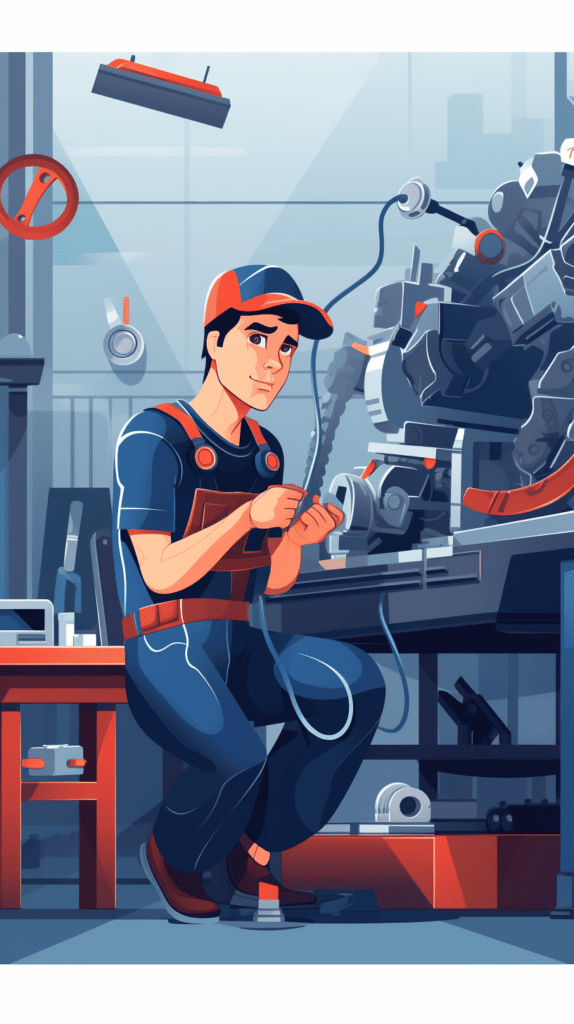
Imagine building a model airplane. You can’t just use any random tool or piece. You needspecific toolsand the right pieces to get that plane to look and work just right. In the job world, these specific tools and pieces are yourtechnical abilities.
Technical abilities are the special skills you learn for a certain job or task. They’re not general skills like talking or listening.
Instead, they’re more about knowing how to use a certain computer program, operate a machine, or even bake the perfect cake!
Here’s why these abilities are so cool:
1.Job Readiness: When you have the technical skills needed for a job, you’re ready to jump in and get started.
2.Efficiency: With the right technical abilities, you can do tasks faster and better.
3.Stand Out: Having strong technical abilities can make you stand out in your job.
Now, you might wonder, “Which technical abilities should I learn?” The answer is: it depends on the job you’re interested in.
If you want to be a computer programmer, learning coding languages like Python or Java is a great idea. If you’re into graphic design, mastering software like Photoshop or Illustrator would be your goal.
When it comes to job interviews, be ready to show or talk about your technical abilities. Maybe you created a cool website, designed a poster, or fixed a tricky machine. Share these stories. They give a clear picture of what you can do.
And remember, the world keeps changing, and new tools and technologies come up. So, always be ready to learn and add new technical abilities to your list.
Technical Skills Examples
Think about playing a challenging video game. You’re faced with obstacles, puzzles, and sometimes even big bosses. To win, you can’t just charge forward. You need to think, plan, and make smart choices.
In the world of work, facing challenges is a lot like this game. And the skills you need to navigate them? That’s whereproblem-solvingandcritical thinkingcome in.
Problem-solving is finding answers to difficult situations.
Critical thinking is carefully thinking about decisions before making them.
Here’s why these skills are golden:
1.Avoiding Mistakes: With good critical thinking, you can see pitfalls or errors before they happen.
2.Saving Time and Resources: Good problem-solvers can find faster, cheaper, or easier ways to do things. Imagine finding a shortcut in a race!
3.Teamwork Boost: When teams face challenges, a problem solver can help guide the way. It’s like having a navigator on a ship during a storm.
So, how can you show these skills in a job interview? Think about times you faced challenges and found solutions.
Maybe you figured out a way to raise money for a school event or solved a tricky homework problem that everyone else found tough. Stories like these can help your interviewer see your skills in action.
Always remember, problem-solving and critical thinking are like muscles. The more you use them, the stronger they get. So, keep looking for challenges, puzzles, or even fun games that test your brain.
Problem-Solving and Critical Thinking Examples
Let’s think of a soccer team for a moment. You have players on the field, each doing their part. Some are defending, some are trying to score, and in the middle of it all is the captain,leading and guiding the team. Just like that soccer team, in many jobs, there’s a mix ofteamworkandleadership.
Teamwork is working together with others to get things done.
Leadership is about guiding, inspiring, and making decisions.
Here’s why these skills can make a difference:
1.Achieving More Together: When people work together as a team, big tasks become easier.
2.Balance of Ideas: With teamwork, you get different ideas and views.
3.Direction and Motivation: Good leaders give a clear path and inspire teams.
So, how can you showcase these skills in a job interview? Remember times when you worked well in a group. Maybe you were part of a school project, or perhaps you took the lead in organizing an event.
These experiences are gold! Talk about them, share how you collaborated, listened, or maybe how you led and made decisions.
Also, keep in mind that good leaders are often good team players too. They know when to lead and when to follow.
Leadership and Teamwork Examples

Picture a gymnast performing a routine. They twist, turn, jump, and bend, adjusting to each move smoothly. Life, especially in the workplace, can be a lot like that gymnastics routine.
Things change, new challenges pop up, and plans might shift. To handle all of this, you need two key skills:adaptabilityandflexibility.
Adaptability is the ability to adjust to new situations.
Flexibility is being open to change and not getting too stuck on one way of doing things.
Here’s why these skills shine:
1.Facing the Unexpected: Sometimes, things don’t go as planned. Being adaptable means you can handle surprises.
2.Learning & Growing: When you’re flexible, you canlearn new thingsand improve.
3.Working with Others: Different people have different ideas. Flexibility helps you work well with everyone.
Wondering how to highlight these skills in an interview? Think about times when you had to change your plan or try something new.
Adaptability & Flexibility Examples
Imagine your room filled with toys, books, and clothes everywhere. Now think of how much easier it is to play, read, or get dressed when everything is in its place.
Just like organizing that room, in the work world, there’s a need to sort, plan, and arrange tasks. This is where yourorganizational skillscome into play.
Organizational skills are about keeping things in order, planning ahead, and finishing tasks on time.
Here’s why these skills are game-changers:
1.Efficiency: When you’re organized, you get things done faster.
2.Reducing Stress: Planning ahead means fewer last-minute rushes.
3.Achieving Goals: Organized people often reach their goals because they know the steps to get there.
Wondering how to showcase these skills in an interview? Reflect on times you’ve planned an event, managed your time to study for tests, or organized a team activity. Sharing these experiences paints a picture of how you can keep things running smoothly.
And here’s a tip: Organizational skills aren’t just about physical things. It’s also about organizing your time, thoughts, and even digital files. So, whether it’s a neat desk, a clear to-do list, or well-arranged computer folders, every bit of organization counts.
Organizational Skills Examples

Imagine looking at a blank canvas. To some, it might seem empty, but to others, it’s a world of possibilities, waiting to be filled with colors, shapes, and stories.
That’s the magic ofcreativity. In the world of work, this canvas is often projects, tasks, or challenges. To paint them uniquely and effectively, we need creativity and its close partner,innovation.
Creativity is coming up with new and unique ideas.
Innovation is applying these ideas in useful ways.
Here’s why these skills sparkle:
1.Standing Out: Fresh ideas make you and your work memorable.
2.Solving Problems: Sometimes, old ways don’t work, and creative solutions are needed.
3.Improving Products or Services: With innovation, things can always get better. It’s like improving a recipe with a new ingredient.
So, how can you highlight your creativity and innovation during an interview? Reflect on times you thought outside the box.
Maybe you found a new way to fundraise for your school, created a unique art piece, or suggested a change at a part-time job that made things better. Sharing these moments gives a peek into your creative mind.
But remember, creativity isn’t just for artists, and innovation isn’t just for inventors. They’re for everyone. Just like anyone can doodle or hum a tune, everyone can think creatively.
Creativity & Innovation Examples
Think about a time you wanted to reach the highest score in a video game. No one was pushing you, but you kept playing, trying, and improving until you achieved it.
That inner drive that made you keep going? That’sself-motivation. And the determination to do your best? That’s yourwork ethic.
Self-motivation is the inner push to achieve, learn, and strive without someone else telling you to.
Work ethic is about your values and dedication to your job.
Here’s why these traits are gold stars:
1.Consistency: With hard skills and a strong work ethic, you reliably give your best.
2.Independence: Being self-motivated means you can get things done on your own.
3.Achieving Goals: With drive and dedication, you’re more likely to reach your aims.
Wondering how to let these traits shine in an interview? Share stories where you took the initiative. Maybe you started a personal project, studied extra to ace a test, or helped others without being asked. These tales highlight your dedication and drive.
Self-Motivation & Work Ethic Examples
Imagine standing in front of a mirror. But instead of just seeing your reflection, this mirror shows your strengths, weaknesses, feelings, and even dreams.
Taking a good look and understanding what you see is whatself-awarenessis all about. Now, imagine every day this mirror shows a tiny new detail about you. Discovering and learning from those details iscontinuous learning.
Self-awareness is recognizing and understanding your feelings, behaviors, and why you do what you do.
Continuous learning is about always looking for new things to learn and grow.
Here’s why these skills are so essential:
1.Making Better Choices: When you understand yourself, you can make decisions that fit you best.
2.Growing Constantly: With continuous learning, you’re always adding to what you know.
3.Building Stronger Relationships: Knowing your feelings and reactions helps in understanding others too.
How can you showcase these skills in an interview? Reflect on times you’ve changed your behavior after realizing something about yourself. Or, discuss a new skill or topic you’ve recently delved into. Sharing these moments paints a picture of introspection and eagerness to learn.
Self-awareness & Continuous Learning Examples

Consider your favorite outfit. The one that fits perfectly, feels great, and always gets compliments. Now, think of each job role as a unique outfit.
Just as you’d tailor your clothes for the perfect fit, you must also adjust your strengths and skills to align with different roles. This is the art oftailoring strengths to specific roles.
In simpler words, this means adjusting and presenting your skills in a way that fits the job you’re aiming for.
Let’s dive into why this approach stands out:
1.Standing Out in Applications: When your strengths align with a job, it grabs the employer’s attention.
2.Increased Job Satisfaction: If your strengths match a role, you’re likely to enjoy the work more.
3.Higher Productivity: When you use your tailored strengths, you can achieve more in less time.
For instance, if you’re eyeing a team leader position and you’re great at motivating others, emphasize that strength. If you’re aiming for a researcher role and have a knack for both attention to detail, and deep diving into topics, make that your highlight.
What are strengths in the context of a job interview?Strengths refer to the unique skills, qualities, and characteristics you bring to a job. They can be natural talents or skills you’ve honed over time. It’s like having special tools in your toolkit that help you excel at certain tasks.
Why is it important to know my strengths for an interview?Knowing your strengths helps you confidently present what you can offer to the employer. It’s like showing off the special ingredients you bring to a recipe that makes it shine.
Can strengths vary from one job to another?Yes, while core strengths like communication might be universal, specific strengths can vary based on the job. It’s like using different tools for different DIY projects.
How do I tailor my strengths to fit a specific role?Research the job, understand its requirements, and align your strengths accordingly. Think of it as choosing the right outfit for a specific occasion.
What if I don’t have all the strengths listed for a job?Focus on your strongest qualities and show a willingness to learn. Everyone has their unique blend of strengths, like a special recipe, and there’s always room to add more ingredients over time.
Is it only about personal strengths, or can I mention technical skills too?Both are valuable. Personal strengths show your character, while technical skills highlight your training and expertise. It’s like having both soft and hard skills in your arsenal.
How can I continuously improve and add to my strengths?Embrace continuous learning, seek feedback, and challenge yourself regularly. It’s like continuously updating and upgrading your toolbox.
So, there you have it. Just like every superhero has their set of powers, you too possess a unique blend of strengths and weaknesses. But the real magic lies not just in having these strengths and weaknesses, but in knowing how to use them.
Always remember, the journey of self-discovery and growth doesn’t have an end point. With each day, new experiences, and challenges, there’s always something new to learn about yourself and the world around you. It’s like reading a book that keeps getting new chapters.
As you move forward in your career, keep these strengths in your toolkit, refine them, and remember to tailor them when needed. You can even take online tutorials to build some of these strengths. The best career advice for job seekers is that the best strengths are transferable skills. You can even use them in your personal life!
With this approach, you’re not just ready for any job interview, but you’re also setting the stage for a fulfilling and successful career.
Related posts:47+ Weaknesses Examples for Job Interviews41+ White Collar Job Examples (Salary + Path)47+ Blue Collar Job Examples (Salary + Path)109+ SWOT Analysis Examples (Definition + Quiz)200+ Talent Examples (List Of Personal Strengths)
Related posts:
Reference this article:Practical Psychology. (2023, October).121+ Strengths Examples for Job Interviews.Retrieved from https://practicalpie.com/strengths-examples-for-job-interviews/.Practical Psychology. (2023, October). 121+ Strengths Examples for Job Interviews. Retrieved from https://practicalpie.com/strengths-examples-for-job-interviews/.Copy
Reference this article:
Practical Psychology. (2023, October).121+ Strengths Examples for Job Interviews.Retrieved from https://practicalpie.com/strengths-examples-for-job-interviews/.Practical Psychology. (2023, October). 121+ Strengths Examples for Job Interviews. Retrieved from https://practicalpie.com/strengths-examples-for-job-interviews/.Copy
Copy
